
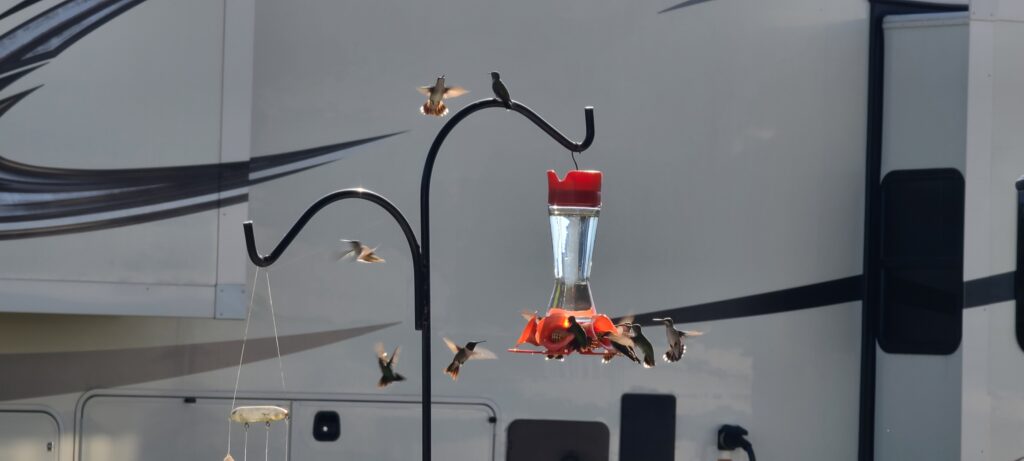
If you’ve stepped outside your RV this week and thought you heard a swarm of aggressive, highly caffeinated bumblebees, don’t panic. You haven’t stumbled into a sci-fi movie. It is officially peak fall hummingbird migration season here on the Texas Coastal Bend, and these tiny feather-weights are putting on a massive show!
Right now, September is the absolute biggest month for hummingbird activity along the coast. Millions of these miniature fighter jets—mostly Ruby-throated hummingbirds—are descending on our coastal towns. They are treating the Texas coast like the ultimate highway rest stop. Why? Because they are gearing up for the terrifying, non-stop 500-mile flight across the Gulf to their winter homes in Mexico and Central America.
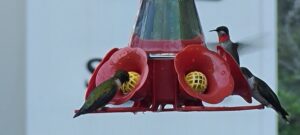
Before they make that massive leap, they have one goal: eat everything in sight.
Mind-Blowing Fast Facts About Our Tiny Visitors
To truly appreciate the feathered chaos happening outside your window, you have to understand how extreme these birds are built. According to wildlife researchers and experts like the Smithsonian’s National Zoo, here are a few things that make them absolute wonders of nature:
- The Ultimate Cardio: A hummingbird’s heart beats up to 1,200 times per minute during active flight! To put that in perspective, their hearts make up about 2.5% of their total body weight, which is the largest heart-to-body ratio in the entire animal kingdom.
- Blender Wings: They flap their wings an average of 50 to 80 times per second. Instead of flapping up and down like standard birds, they rotate their wings in a full figure-8. This unique joint structure makes them the only birds on Earth that can fly backward, upside down, or hover in mid-air.
- An Insane Metabolism: They consume up to double their body weight in nectar and insects every single day. Their metabolism is roughly 100 times faster than an elephant’s. In fact, going just a few hours without food can be fatal to them.
- Tiny but Brainy: While their brains are only about the size of a BB, they possess an incredible spatial memory. They can remember every single flower and feeder they’ve ever visited, including how long it takes for a flower to refill with nectar!
- No Walk in the Park: Their feet are so small and weak that they are physically incapable of walking or hopping. They only use them for perching and grooming.
Local Festivities & Where to See Them
If you want to see this spectacle in its full glory, we are sitting in the absolute perfect spot here at Cocahoe RV Park. Just up the road from us, our neighbors are hosting the famous Rockport-Fulton HummerBird Celebration. It’s one of the oldest and biggest hummingbird festivals in the country, featuring spectacular home tours where you can see thousands of birds buzzing around local backyard sanctuaries.
How You Can Help the Travelers (Right from Your RV!)
Want to get a front-row seat to the action right outside your camper door? Here is how you can help these tiny travelers make their big trip:
- Hang a Feeder: A simple hummingbird feeder suction-cupped to your RV window or hung from your awning will instantly attract visitors.
- Mix the Perfect Cocktail: Skip the store-bought red dyes (it’s bad for their little kidneys). The perfect fuel recipe is simple: 4 parts water to 1 part plain white sugar. Boil it to dissolve the sugar, let it cool, and serve!
- Don’t Rush to Take it Down: A common myth is that leaving feeders out will stop them from migrating. Don’t worry, daylight changes and instinct tell them when to leave, not your free buffet. Keep those feeders clean and filled for at least two weeks after you see the last bird to help any late-stragglers who need a boost.
So, mix up a batch of sugar water, set up your lawn chairs, and enjoy the show! You will be entertained for hours watching God’s amazing little creatures.
Leaving you with a little salt air,
Amy
P.S. “Did you know that large spiders and praying mantises are known opportunistic predators capable of capturing and killing hummingbirds? While working on this blog post, I found a praying mantis lying in wait to catch a hummingbird. Needless to say, I relocated him far from my feeders.”
“May the Lord bless your journey and keep the mosquitoes at by until we meet again here on the coast.”